

India’s Nuclear Power Ecosystem: Which companies are Growth Engines and why?
Notice
This article is for informational and educational purposes only and does not constitute financial advice or investment recommendations for any stocks. All the mention stocks name are already available in webs and other published articles.
Introduction
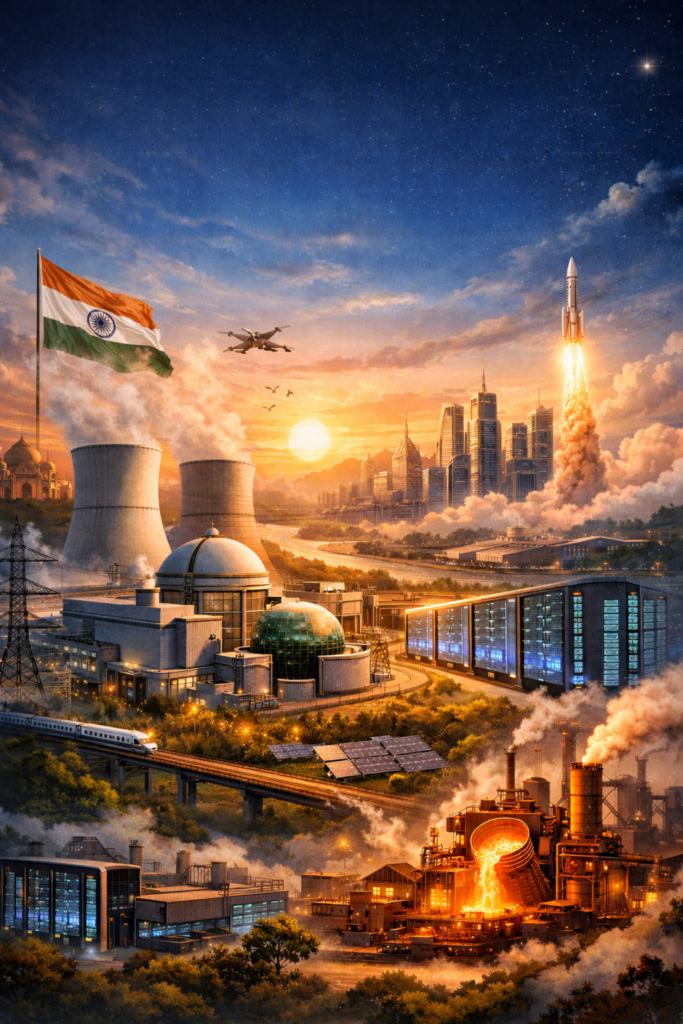
India’s nuclear power ecosystem is transitioning from a state-run monopoly into a public–private partnership–driven industrial growth model. This transformation is being accelerated by legislative reforms, government budget allocations, and increasing demand for reliable, carbon-free baseload power.
A major catalyst is the development of factory-fabricated modular reactors, particularly Bharat Small Reactors (BSRs), designed for private-sector deployment. These reactors aim to supply stable electricity to AI data centres, heavy manufacturing industries, and energy-intensive infrastructure.
The investment opportunity spans:
- Core engineering and EPC services
- Heavy equipment manufacturing
- Specialized materials and infrastructure
- Industrial end-users such as technology, metals, mining, and utilities
India is rapidly expanding nuclear power capacity to address a major challenge: meeting massive 24/7 electricity demand that renewable sources alone cannot satisfy. National energy demand is projected to triple by 2047, making nuclear energy a strategic priority.
Key Drivers of India’s Nuclear Power Expansion
1. Powering the AI and Data Centre Boom
India is positioning itself as a global hub for artificial intelligence and cloud infrastructure. Data centres require 99.99% power reliability, which intermittent renewable sources cannot provide without expensive storage.
Key Developments
- Small Modular Reactor Mission
The government launched a ₹20,000-crore program to develop SMRs that can be installed near industrial clusters and data centres. - Hyperscale Demand
Major industrial groups such as Reliance Industries, Adani Group, and Tata Power are exploring nuclear power as captive energy sources.
2. Energy Security and Thorium Independence
India holds approximately 25% of global thorium reserves, offering long-term energy independence.
Strategic Initiatives
- Three-Stage Nuclear Program — aims to utilize indigenous thorium fuel cycles.
- Prototype Fast Breeder Reactor (PFBR) at Kalpakkam began fuel loading in 2025, marking progress toward thorium utilization.
3. Decarbonising Heavy Industries
Industries such as steel, cement, and aluminium require high-temperature energy that renewables cannot efficiently provide.
- Replacement of coal-based captive plants with nuclear reactors. Small Modular Reactors (SMRs) are specifically being designed as captive plants to provide this reliable, carbon-free thermal energy which intermittent renewables cannot easily match.
- Support for India’s Net Zero 2070 target
- Private reactor ownership enabled under the SHANTI Act (2025).
4. High Efficiency and Land Savings
- Nuclear plants require up to 20× less land than solar for similar output.
- Capacity factor: 80–90%+ vs 20–30% for solar/wind.
- Reduces land acquisition challenges in high-density regions.
India’s Nuclear Power Supply Ecosystem
1. Primary Power Operators
Nuclear power generation remains dominated by government entities with increasing private participation.
- Nuclear Power Corporation of India (NPCIL) — Operates India’s commercial reactors.
- Bharatiya Nabhikiya Vidyut Nigam (BHAVINI) — Fast breeder reactor development.
- NTPC Limited subsidiary NTPC Parmanu Urja Nigam — Nuclear expansion targeting 30 GW by 2047.
- ASHVINI JV — Joint venture between NTPC and NPCIL.
2. Fuel and Materials Supply
Sensitive fuel-cycle activities remain under government control.
- Uranium Corporation of India — Uranium mining.
- Nuclear Fuel Complex — Fuel fabrication.
- Heavy Water Board — Heavy water supply.
- Rosatom — International uranium supply partner.
3. Infrastructure and Engineering Suppliers
These companies manufacture reactor components and build plants.
- Larsen & Toubro — Reactor pressure vessels and steam generators.
- Bharat Heavy Electricals Limited — Turbine generators.
- MTAR Technologies — Precision reactor components.
Raw Materials Used in Nuclear Power Plants
1. Nuclear Fuel
- Natural uranium (PHWR reactors)
- Enriched uranium (light water reactors)
- Thorium (future Stage-3 fuel)
- Plutonium (fast breeder reactors)
2. Operational Fluids
- Heavy water (moderator/coolant)
- Liquid sodium (fast breeder coolant)
- Beryllium and graphite (moderators)
- Light water (cooling)
3. Structural and Shielding Materials
- Zirconium alloys
- Stainless steel
- Boron, cadmium, hafnium (control rods)
- Lead and reinforced concrete
- Nickel alloys
Key Indian Suppliers
- IREL (India) Limited — Thorium processing.
- Mishra Dhatu Nigam — Nuclear-grade alloys.
Listed Companies in India’s Nuclear Value Chain
1. Core Engineering and Components
- Walchandnagar Industries — Class-I nuclear components.
(L&T, BHEL, and MTAR Technologies already mentioned above as key suppliers.)
2. Specialized Materials and Infrastructure
- Venus Pipes & Tubes — Stainless steel tubes.
- Hindustan Construction Company — Nuclear infrastructure.
- WPIL Limited — Pump and fluid systems.
- Patels Airtemp (India) Limited — Heat exchangers.
3. Emerging Private Power Operators
- JSW Energy
- Tata Power
- NTPC Limited
These companies are exploring Bharat Small Reactor deployment through joint ventures and captive power models.
Who Uses Nuclear Power in India?
1. AI and Digital Infrastructure
- Hyperscale data centres
- AI training facilities
- Captive clean energy users
Major participants include Microsoft India and AdaniConneX.
2. Heavy Industry
Energy-intensive industries shifting from coal:
- JSW Steel
- Tata Steel
- Hindalco Industries
- Jindal Steel and Power
3. Public Utilities
- State electricity boards
- National grid supply (currently ~3% of India’s electricity)
4. Strategic and Remote Users
- Remote mining and industrial clusters
- Military and naval applications
Why Industries Are Switching to Nuclear
- Captive power rights ensuring long-term electricity access
- Decarbonisation pressure from global carbon regulations
- Reliable baseload power for AI and industrial growth
- Government policy support and incentives
Summary
India’s nuclear sector is transforming into a high-growth industrial ecosystem driven by policy reforms, industrial demand, and energy security needs. The shift from state monopoly to public–private participation, combined with Bharat Small Reactors, positions nuclear power as a critical backbone for:
- AI and digital infrastructure
- Heavy manufacturing
- Green hydrogen production
- Energy independence
The opportunity extends across engineering firms, materials suppliers, infrastructure developers, and industrial power users — making nuclear energy a key theme in India’s long-term industrial expansion.
Legal Disclaimer
This article is for educational purposes only. I am not authorized SEBI research analyst and financial advisor.
Any mention name of companies or sectors are for analytical purposes only and should not be considered a recommendation to buy, sell, or hold securities. Investors should conduct independent research and consult qualified financial professionals before making investment decisions.